Voices from Fukushima: 15 years has passed
By Konno Sumio, Vice Director, The Museum of Our Experiences (Oretachi no Denshōkan)
On that day, I was in the office of the Onagawa Nuclear Power Plant. I was planning to drive home for the weekend and was hoping to depart at 15:00 to avoid the frozen winter roads. At the time, I had been assigned to the NPP to perform maintenance on electrical instrumentation.
The mobile telephones on the table started to ring all at once, and I was struck by an earthquake greater than I had ever experienced before. In front of my eyes, the ground surface shock tremendously and cracked, and a great tsunami arrived. When the first massive tsunami waves had passed, the heavy-oil tanks in the nuclear power plant were upside down. I realized that a very abnormal event was taking place. Power was lost, and the seawater cooling pumps were submerged. It was a critical situation. Dedicated recovery work miraculously prevented the worst-case scenario.
When 13 years had passed since that time, Onagawa NPP Unit 2 was restarted with raised tide banks and newly built tide barriers. I am against the restart of all nuclear reactors, not only those damaged by the 2011 earthquake but also those that were not, such as Kashiwazaki–Kariwa and Tomari. The risks are too high.
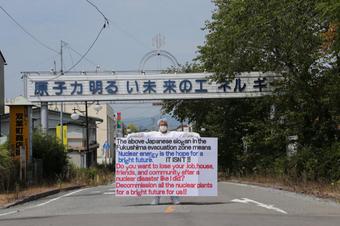
In 2017, the evacuation order was lifted from the area where my home was situated, and in the summer of 2020, it was torn down. There are no remains left there. The house where I was born is in the same town, but it is in an area designated as a “difficult-to-return zone,” and is surrounded by barricades. We cannot visit our family’s graves without applying for an admission permit.
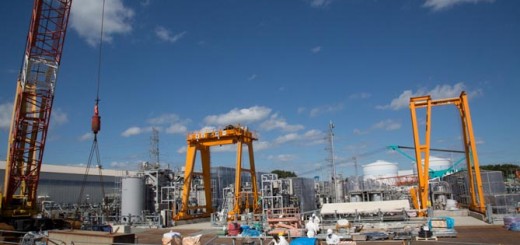
On the other hand, many multistory buildings, laboratories, and other facilities are being built in the coastal Hamadori area in Fukushima under the name of the “Innovation Coast Project,” overwriting the history of the nuclear disaster. Especially the development of robots and drones, which can be used for military purposes, are attracting many participants, such as companies and academic institutions, and a great amount of investment is being made in the area.
It is not that I find all those projects annoying. I am putting my hopes on hydrogen energy and bioplastics.
For better or worse, Namie Town in the Hamadori area is being changed by the Fukushima Institute for Research, Education and Innovation (F-REI). However, things are changing without the participation of locals.
Population before the 2011 earthquake, 21,000; current residents, 2,300