15 Years After the Fukushima Nuclear Accident: A Look at Radioactive Contamination of Food
By Tanimura Nobuko
* Becquerels per kilogram (Bq/kg) used as unit for radioactive concentration herein, unless otherwise noted.
This article gives a retrospective overview of the radioactive contamination of the environment that resulted from the accident of Tokyo Electric Power Co.’s Fukushima Daiichi Nuclear Power Station (TEPCO’s Fukushima Daiichi NPS), focusing on its effects on food products and how that was handled.
Radioactive Substances Released from the Nuclear Reactors
When uranium in the fuel of nuclear power plants (NPPs) undergoes nuclear fission, nuclei of various sizes are generated, resulting in the production of a wide variety of radioactive substances (nuclides). In addition, NPPs in operation produce radioactive elements with atomic numbers greater than uranium (transuranic elements) such as plutonium, along with radioactivated materials such as iron, contained structurally in the reactor core.
In the course of the Fukushima Daiichi nuclear accident, reactor core meltdowns and hydrogen explosions occurred. Large amounts of radioactive materials were spread by winds and ocean currents, not only across Japan but around the world. This resulted in such heavy contamination that a vast area was rendered uninhabitable, notwithstanding that an estimated 80% of the radioactive cesium released fell over the Pacific Ocean.
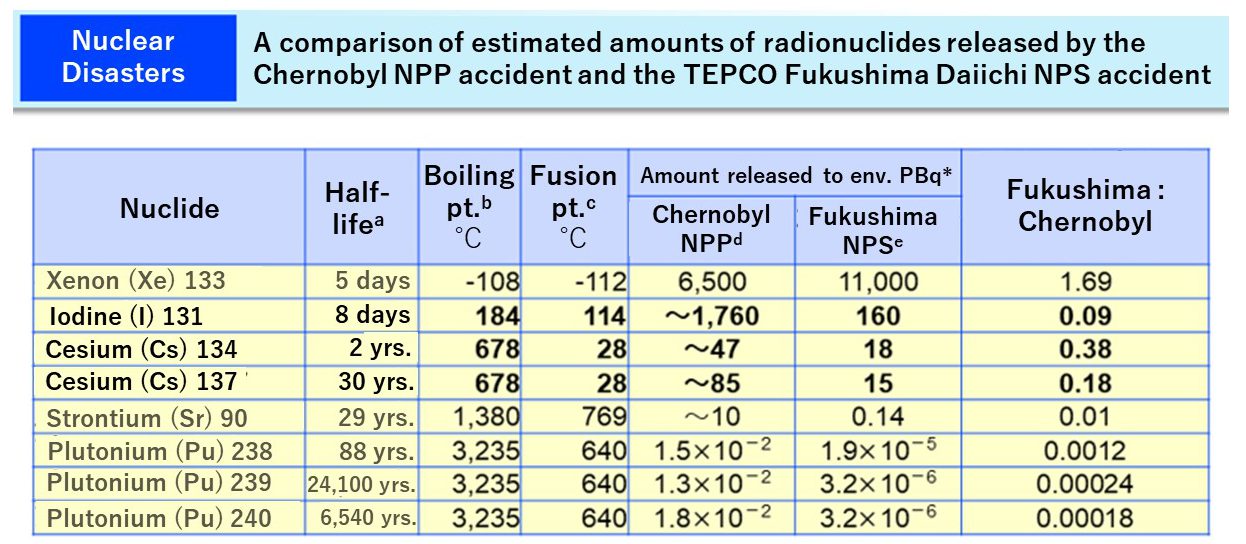 Figure 1 presents an
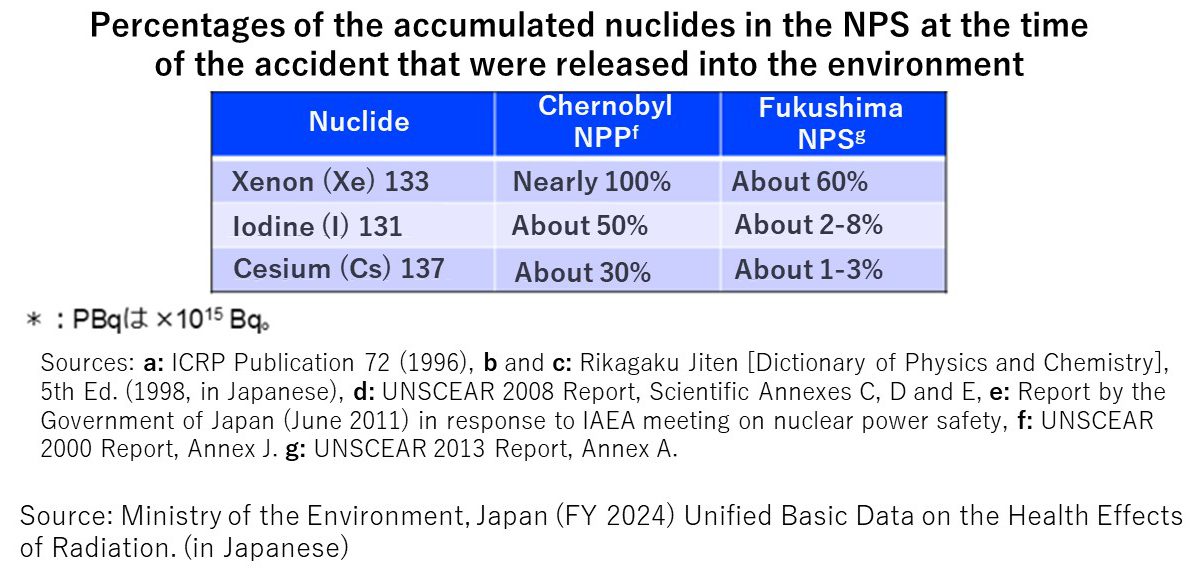
Fig.1 Estimated amounts of radionuclides released during nuclear accidents.
evaluation of the radionuclides released in the course of the Fukushima nuclear accident. In addition to xenon-133, which is a gas at room temperature (half-life 5 days), large quantities of iodine-131 (half-life 8 days), cesium-134 (half-life 2 years) and cesium-137 (half-life 30 years) were released. These are easily gasified with low boiling points and are key nuclides in internal exposure. During the accident, nuclides with relatively high boiling points that did not diffuse in the atmosphere came into direct contact with the water being used to cool the nuclear fuel, dissolving into it, thereby resulting in pollution of the ocean at the time of the accident. Even now some of these nuclides are being released into the ocean along with the contaminated water that has undergone ALPS treatment.
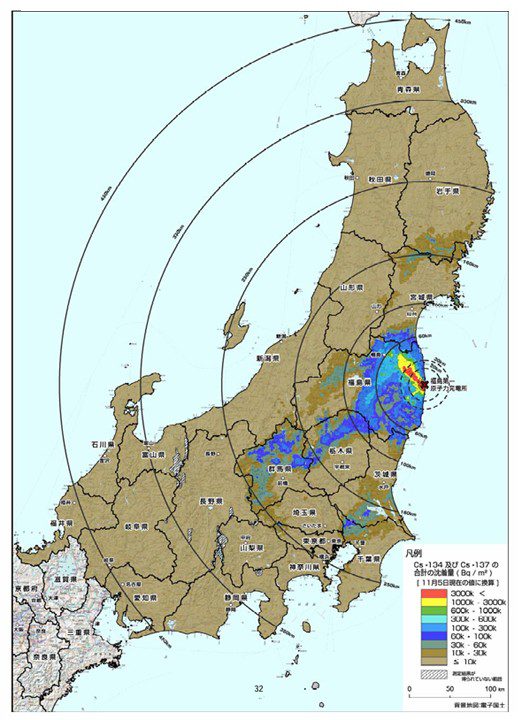
Fig. 2 Total amounts of cesium-134 and -137 deposited on the ground surface across all of eastern Japan, reflecting the results of measurements taken during the 4th airborne monitoring.
Figure 2 provides a map of the concentrations of radioactive cesium deposited on soil, which were observed via aircraft monitoring. As can be seen from the map, an enormous expanse was found to have been contaminated. As it was being transported by wind, however, it caused not only external exposures to anyone in the area, but also internal exposures via respiration, before being deposited onto the soil. There are few data, however, on the state of the atmospheric contamination or how it changed over time, and no detailed evidence regarding initial exposures. Note also that other short-lived radionuclides (tellurium, technetium, molybdenum, etc.) were also detected in the environment in the early days after the accident, but almost no attempts were made to evaluate their health impacts.
Food Contamination and Shipping Restrictions
When it became clear that radioactive contamination of agricultural products had occurred, “provisional regulatory values” for food products were established to reduce internal exposures. For general foods such as meat or vegetables, the standard was 500 Bq for radioactive cesium and 2,000 Bq for iodine, while for drinking water and milk, it was 200 Bq for radioactive cesium and 300 Bq for radioactive iodine. A year later in April, the standard was revised to “New Reference Values for Radioactive Cesium.” This stipulated 100 Bq for general foods, 50 Bq for infant food and milk, and 10 Bq for drinking water. The limit of exposures resulting from food intake was revised from 5 millisieverts per year (mSv/yr) under the interim standards to 1 mSv/yr under the new standards and has remained that ever since.
Normally, exposures to the general public from nuclear power facilities are supposed to be limited to a maximum of 1 mSv/yr, but those are relaxed once a nuclear accident occurs. As can be seen in Fig. 2, the radioactive contamination of the soil was concentrated mostly in eastern Japan; however, this regulatory relaxation was applied nationwide, including in western Japan, where almost no contamination had occurred.
- Agricultural Products
To prevent the distribution of foods exceeding the standards for contamination, shipping restrictions and intake restrictions were established, under which the type and origin of foods were specified. The limits indicated for one year (until March 29 of the next year) were as shown in Fig. 3.
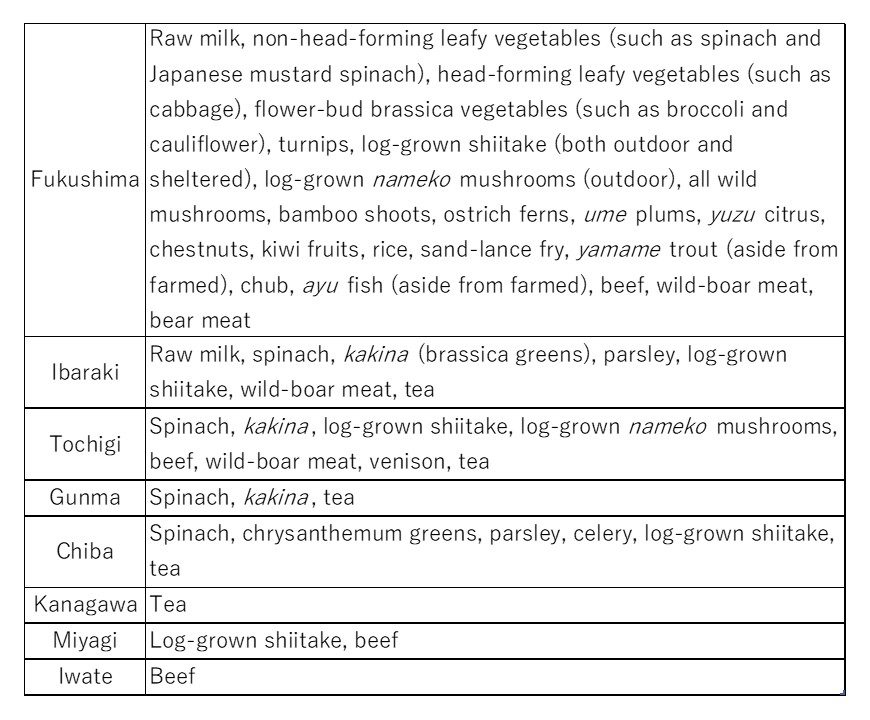
Fig. 3 Restrictions on shipments and intake one year after the Fukushima Daiichi NPS accident.
In the early days after the accident when information on contamination of farmland soil was limited, the restrictions covered a broad region, but as details on the actual degree of contamination became clear, the target areas came to be specified in more detail.
The number of targeted food products has decreased year-by-year, but some shipping restrictions continue to this day. Currently (as of October 2025), agricultural products from the difficult-to-return areas near the Fukushima NPS are subject to restrictions, as are wild foods that are not grown under human supervision, such as wild vegetables, mushrooms, and game from 13 affected prefectures (Fukushima, Iwate, Miyagi, Yamagata, Ibaraki, Tochigi, Gunma, Saitama, Chiba, Niigata, Yamanashi, Nagano, and Shizuoka).
Since 2012, Fukushima Prefecture has carried out inspections of all bags of brown rice produced in the prefecture. Rice production has been restricted according to degree of soil contamination in the paddy fields and measures have been taken to suppress cesium absorption through enhanced potassium fertilization. From 2020, after brown rice was confirmed not to have exceeded the standard value for five consecutive years, all screening tests for rice (in which anything with 25 becquerel or less passed, and the rest all underwent detailed inspection) were switched over to monitoring tests in all areas except for those with evacuation orders. In FY2019, of the 9,492,612 bags tested, there were four bags that had 25-50 Bq/kg, but the rest passed the screening tests.
Beef inspections were similarly switched over from inspection of each carcass to monitoring tests in FY2020, but in FY2024, one sample exceeded the standard value (100 Bq). This occurred because someone had accidentally fed the cattle old rice straw that had been gathered and sequestered in April 2011 by the farmers, and though this meat was not distributed, with inspection of each animal having been discontinued, this example of exceeding the standard value has dire significance.
According to a summary compiled by the Ministry of Health, Labour and Welfare, 74,182 tests for radioactivity in rice were carried out in the evacuation zone in Fukushima in FY2024, and 319 sampling tests were carried out in 17 prefectures, excluding the evacuation zone in Fukushima Prefecture. All of these gave results below the standard value of 50 Bq or less, including “not detected.” The number of tests conducted on items other than rice was 100 for wheat, 2,380 for vegetables, 584 for fruits, 101 for legumes, 166 for other regional specialties, and 9,726 for mushrooms and wild vegetables. In one fruit sample (persimmons) and 119 samples of mushrooms and wild vegetables, results between 50 and 100 Bq were obtained. There were 63 samples of mushrooms and wild vegetables with readings over 100 Bq (exceeding the standard value).
Any readings below 50 Bq down to “not detected” were lumped together, so detailed results on persimmons were confirmed for reference. Among 88 tests of persimmons, 75 had non-detectable levels (with the detection limit being 1.2~25 Bq/kg), 10 samples had levels under 10 Bq, two had 10~25 Bq, and one exceeded 50 Bq with a reading of 51 Bq (from Date City, Fukushima Prefecture).
Serious radioactive contamination of the meat of wild game (birds and animals) is an ongoing concern.
Of 8,034 samples inspected in FY 2024, 2,001 were found contaminated, nearly a quarter. There were 1,875 cases under 100 Bq, 109 cases of 100~500 Bq, and 17 cases exceeding 500 Bq—all of which were from wild boars. Eight of those had levels between 500 and 1,000 Bq, eight more had levels between 1,000 and 5,000 Bq, and one tested at an astounding 14,000 Bq (from Iidate Village, Fukushima Prefecture), an extreme degree of contamination.
- Tap Water
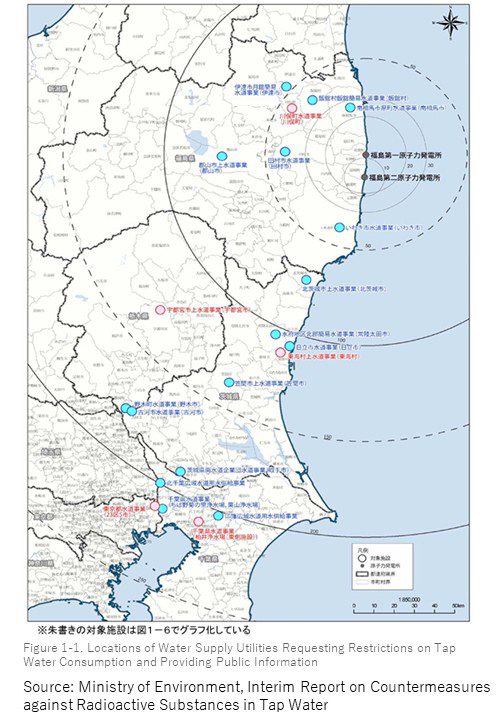
Fig. 4 Areas in which limits on intake of tap water have been implemented (indicated by small circles on the map).
Tap water has also been found contaminated with radioactive substances. In the early days after the accident, radioactive iodine was detected in tap water in Fukushima Prefecture and 10 of its nearest neighboring prefectures (Miyagi, Yamagata, Ibaraki, Tochigi, Gunma, Saitama, Chiba, Tokyo, Kanagawa and Niigata). There was just one place in Fukushima Prefecture where it exceeded the provisional regulation value of 300 Bq, and its intake was restricted there, but in five prefectures (Fukushima, Ibaraki, Tochigi, Chiba and Tokyo) it exceeded 100 Bq, the standard regulated for drinking water for infants, and its intake by infants was restricted (Fig. 4). It came as a severe shock to society that tap water in the capital city more than 200 km away from the NPS had been contaminated. Radioactive cesium was also detected in the tap water of eight prefectures (same list as above, but excluding Kanagawa and Niigata), but levels exceeding the standard (provisional regulation value of 200 Bq) were not observed.
Japan’s Nuclear Regulation Authority (NRA) continues to investigate concentrations of radioactive substances in all 47 of Japan’s prefectures. Currently, radioactive cesium is detected in tap water at about 1/1000 Bq in the Tohoku and Kanto regions only and is not detected in western Japan (Fig. 5).
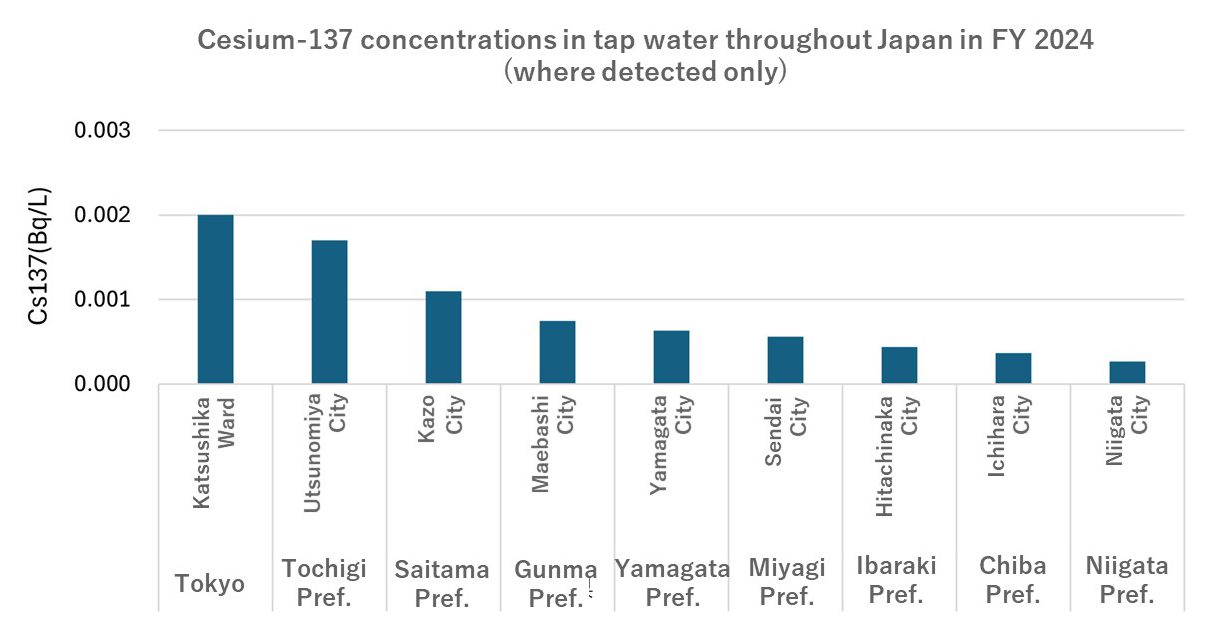
Fig. 5 Cesium-137 concentrations in tap water in 2024.
This finding reminds us again that once contaminated, the environment cannot be restored to its original state even after years have passed, and that mainly in eastern Japan the influence of contamination from the Fukushima nuclear accident continues to be observed widely in the infrastructure of tap water—an inescapable necessity for daily life.
- Marine Products
During the Fukushima nuclear accident, the reactors were damaged and highly radioactive contaminated water was unintentionally released into the ocean. Since then, to prevent further leakage of highly radioactive water, water with relatively low concentrations of contaminants has been released intentionally into the ocean. Contamination of marine products has ensued. First, the fry of certain fish such as Pacific sand lance and anchovies became subject to shipping restrictions due to contamination; shipping restrictions later spread to bottom fish such as flounder. Contamination exceeding the standard value has also been detected in freshwater fish in rivers and lakes.
Surveys undertaken ten years or more after the accident have revealed seven cases of freshwater fish (char and yamame trout) and three of black rockfish (Sebastes schlegelii, a marine species) have been found exceeding 100 Bq (as of 16 December 2025), thus freshwater fish tend to be more subject to contamination than saltwater fish.
In January 2022, cesium at 1,400 Bq—well above the food standard value—was detected in a black rockfish taken off the coast of Fukushima Prefecture, and in May 2023, 18,000 Bq was confirmed in a black rockfish taken from the port of the Fukushima Daiichi NPS, though that never would have been assumed to be edible.
- Oceanic Releases of ALPS Treated Water
Brushing off opposition from local stakeholders and voices around the globe, TEPCO began releasing ALPS-treated, but still contaminated water into the ocean starting in August 2023, citing a lack of storage tanks at the NPS, which was hindering decommissioning work. ALPS-treated water contains radioactive tritium, which in principle cannot be eliminated, and numerous other radionuclides that cannot be cleared completely. Tritium can be a component of water, which makes of 60 percent of our bodies, as well as DNA, so it constitutes a health risk. And that’s not all. Among the nuclides aside from tritium that cannot be eliminated, carbon-14 (C-14) has a high residual concentration, and because it can replace the carbon in carbohydrates, lipids, amino acids and other biological molecules, its uptake into the body is of particular concern.
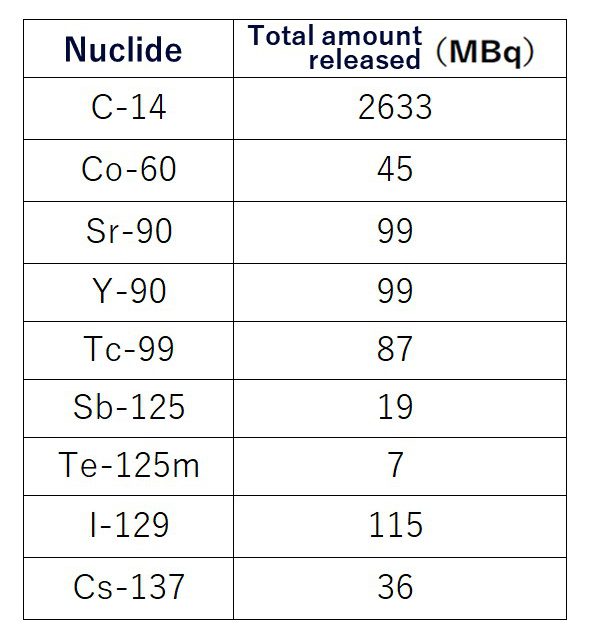
Fig. 6 Nuclides in ALPS treated water released into the ocean and total amounts through the end of 2025.
As of the end of 2025, a total of 133,321 m3 of ALPS treated water had been released, containing an estimated total of about 31.2 trillion Bq of tritium. The total amounts of nuclides released other than tritium were calculated from their residual concentrations in the treated water and the total amount of the treated water released (Fig. 6). The cumulative amounts are not insignificant. Obviously, these radionuclides would never have been disposed of in the ocean if the nuclear accident had not occurred to begin with. In the future we believe it will be necessary to properly investigate their behavior in the natural environment.
In situations where humans can control the environment, as with agricultural and marine products, contamination exceeding the standard practically disappeared several years after the accident. Moreover, it was possible to prevent the distribution of contaminated rice exceeding the standard value by carrying out inspections of every bag of rice. On the other hand, though, there have been cases in which human error resulted in contamination, such as when cattle were provided with contaminated feed, and highly concentrated contamination continues to be seen sporadically in edible wild plants and mushrooms, wild-caught fish and the meat from wild game, even many years later. There remains much we still do not understand about the actual state of radioactive contamination of forest and marine environments in which we humans are unable to intervene. And problems continue to arise.