Who’s Who: On Mr. Murakami Tatsuya
By Aizawa Kazumasa, a Tokai Village resident, on July 15, 2025
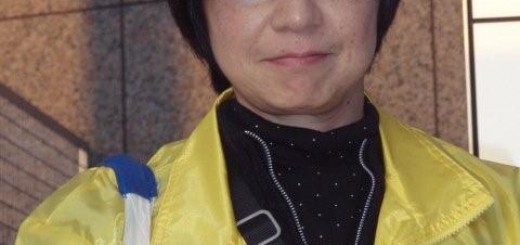
Murakami Tatsuya made unsparing efforts to expand residential autonomy. As the mayor of Tokai Village, he placed residential autonomy at the center of his administration, especially concerning the supervision of nuclear facilities. He committed himself to various noteworthy measures: After the 1997 fire and explosion accident at the Tokai Reprocessing Plant, which was run by former Power Reactor and Nuclear Fuel Development Corporation (today’s Japan Atomic Energy Agency), Mayor Murakami made strenuous efforts to ensure the safety of local residents when the reprocessing plant was restarted. When the JCО Co. criticality accident occurred in 1999, he, on his own responsibility, ordered residents in the nearby areas to evacuate, and was committed to the action to preserve the accident-site facilities to help people to remember the accident (in the end, a replica was produced). What is the most impressive to me among his efforts is that, after the Fukushima Daiichi NPS disaster of March 11, 2011, Mr. Murakami initiated a movement that built the basis of the new safety agreement between the Japan Atomic Power Co. and neighboring municipalities concerning Tokai Daini Nuclear Power Plant by talking to the mayors of the municipalities adjacent to Tokai Village and other surrounding municipalities. He gave shape to the movement that arose from his idea.
The conventional agreement stated that, when Japan Atomic Power Co. wanted to build a new plant, or an additional plant, or to restart the Tokai Daini Nuclear Power Plant, the company was required to obtain authorization only from the hosting municipalities, that is to say, Tokai Village and Ibaraki Prefecture, through “prior agreement” and “prior discussion.” The March 11 disaster tore down the “safety myth” of nuclear power plants, and the understanding about them was changed to one of “accidents will happen.” Mayor Murakami thought that not only the hosting municipalities but also the adjacent municipalities and those surrounding them should have the same authority as Tokai Village regarding the start and extension of lifetime of the nuclear reactor, because those municipalities are certain to be directly influenced by any accident that might occur. He contacted the mayors of Hitachi City, Hitachinaka City, Naka City, Hitachiota City and Mito City to have a discussion meeting. The meeting later developed into a panel of the mayors of municipalities in the nuclear site area (“Panel of Mayors”), and the panel started to meet periodically. Some of the mayors already thought that the authority that Tokai Village possessed should also be given to their municipalities. Because Tokai Village, a municipality hosting a nuclear power plant, already had that authority, and invited neighboring municipalities to share it, the panel started up smoothly and commenced activities. Discussion between the panel and the Japan Atomic Power Co. began to establish a new safety agreement. However, it took time to reach the agreement, probably because the Japan Atomic Power Co. regarded such an agreement as disadvantageous to the company because, up until that time, the company had needed to negotiate only with Tokai Village, but now it would need to negotiate with five more cities.
In July 2012, the Panel of Mayors sent its first proposal for a review of the nuclear safety agreement to the Japan Atomic Power Co. president, but the reply to the proposal was kept pending. Two more proposals were submitted in March and June 2013, but the Japan Atomic Power Co. once again kept them pending. When those proposals were submitted, Mr. Murakami was still the mayor of Tokai Village, but he decided not to run in the mayoral election in September 2013. It was an important time to proceed with the discussion about nuclear power and many villagers encouraged him to run, but probably because his partner had passed away shortly before, he did not have the motivation and was not able to live up to the villagers’ expectations.
The Panel of Mayors lost Mr. Murakami’s leadership, but their activity continued by taking over his intention, the aim to establish a new safety agreement. When the newly established Nuclear Regulation Authority of Japan revealed the new regulation standards concerning nuclear reactor restarts and other nuclear-related matters, the Japan Atomic Power Co. began to act to obtain a restart agreement according to the new standards. However, the issue of the new safety agreement was still kept pending. After remaining silent for four years and six months, the Japan Atomic Power Co., in March 2017, released the gist of a new agreement. There have been many twists and turns since then, but the new agreement was signed in March 2018 between the company and the municipalities. Thus, the six municipalities are involved with the restart of the nuclear reactor, while the authority provided to the municipalities was renamed from “prior agreement” to “substantial prior agreement.”
Nevertheless, the idea of expanding the authorizing local municipalities in nuclear administration was firstly proposed by, and led powerfully by, Mr. Murakami, and the agreement was realized by the ensuing mayors’ efforts, which was a highly significant achievement. Today is the very time when the new agreement that has thus been won should demonstrate its true significance.